

Childhood Trauma
“When you say ‘Yes’ to others, make sure you are not saying ‘No’ to yourself.”
– Paolo Coelho
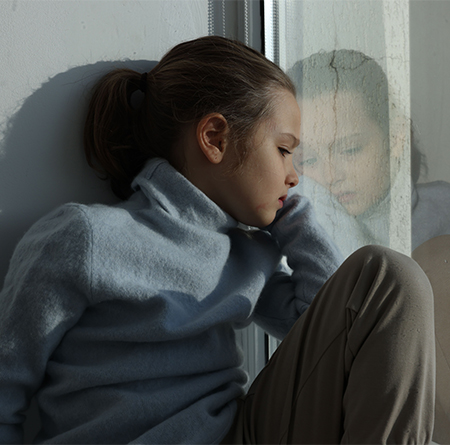 Childhood trauma does not remain in the past.
Growing up with adverse childhood experiences create a ripple effect that shapes a person’s entire life. These early wounds often manifest as chronic anger, anxiety, and low self-esteem.
Over time, this emotional pain can fuel deeper struggles with chronic depression, substance use, eating disorders, and suicidality, while making it incredibly difficult to form healthy, lasting relationships.
Every individual experiences and processes trauma differently. Yet, when left unaddressed, these deep wounds often pave the way for a lifetime of emotional pain.
This internal struggle is rarely confined to childhood or the home where it began. Instead, it follows you into adulthood, disrupting your romantic relationships, educational pursuits, and professional careers.
As these survival strategies take root, you unconsciously learn to shrink yourself. To preserve a sense of safety, you begin to settle for less, over-compromise, and silence your own voice.
Chronic people-pleasing and avoidance behavior become part of your coping mechanisms, making you deeply dependent on the approval of others while consistently underestimating your own true value.
Trauma affects all your relationships.
Instead of truly seeing the people in front of you, you become attached to their potential. This pattern inevitably creates chronic frustration, a deep sense of isolation, and a profound imbalance in your connections.
It breeds persistent loneliness that follows you whether you are entirely alone or in a crowded room. Feeling fundamentally misunderstood, you become guarded and secluded.
Over time you learn to chase love and carry the entire weight of your relationships only to receive crumbs in return.
When you are wounded and engaging with toxic or unhealthy people, you find yourself trapped in survival mode. This reactive state does not allow for clear thinking and healthy emotional processing. It forces you to operate through a thick fog and confusion.
Eventually, out of sheer exhaustion, you feel you have no choice but to build a wall, become hardened, and learn to manage entirely on your own.
 There is hope.
Our work together is designed to help you make the changes needed to overcome the emotional and physical suffering of childhood trauma.
By learning to slow down and listen to your body, you will gain a deeper understanding of yourself and improve your relationships with others.
Together, we will help you understand how to regulate your nervous system so you can manage your challenges and reclaim control over your life.
I understand your situation.
Unfortunately, the painful reality of trauma is not foreign to me. Having grown up in a household where both emotional and physical safety were often lacking, I spent years quietly struggling with many of these very same challenges.
In our work together, I will help you recognize and dismantle the hidden patterns of behavior and thinking that hold you back. While it is easy to dismiss these challenges as minor, everyday flaws, their cumulative weight quietly erodes the overall quality of your life.
Healing from childhood wounds does not mean you will never experience triggers or anxiety again. Instead, it means you will develop the resilience to navigate these difficulties much more effectively.
My hope is that by sharing my story, I can offer a powerful message of hope—proving that while the past cannot be rewritten, overcoming the challenges associated with childhood trauma is entirely possible.
I am glad that you are here. Let’s connect!